The MIT SPURS/Humphrey Program – a small gem nestled in the Department of Urban Studies and Planning (DUSP) with scores of former fellows in leadership positions in countries around the world – will quietly turn 60 next year. And like most 59-year-olds, the program, or its directors, have stepped back to take a long look at past accomplishments and make some focal adjustments for the future.
The Special Program for Urban and Regional Studies (SPURS) will retain its commitment to bringing fellows to the U.S. for study, cultural exchange, and professional growth. But it will now lean more into MIT’s core strength — technology — and how technology policy can revolutionize urban planning and development throughout the world, including through the adoption of devices and methodologies designed specifically for use in emerging nations.
“The transition to technology policy echoes an emphasis that has long defined MIT’s approach to teaching and problem-solving, where the governance, financing, and management of technologies are central concerns,” says Duane S. Boning, MIT vice provost for International Activities and the Clarence J. LeBel Professor in the Department of Electrical Engineering and Computer Science (EECS). “Under this revised focus, MIT is exceptionally well-positioned to provide SPURS Fellows with access to world-class faculty, interdisciplinary coursework, and research initiatives addressing some of the defining issues of our time, many of which require collaboration and problem-solving across countries.”
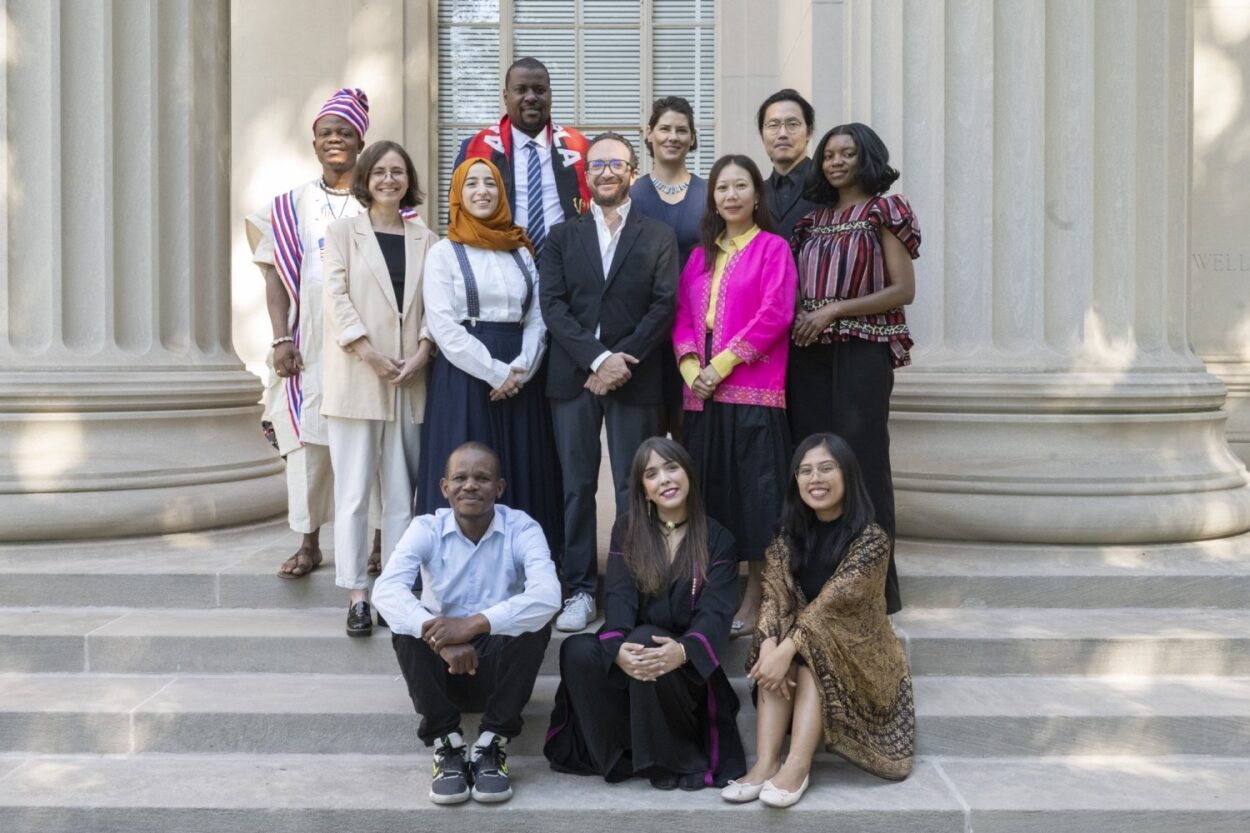
Founded in 1967 by Professor Lloyd Rowdwin with a grant from the Ford Foundation, the program is now supported, in part, by the Hubert H. Humphrey Fellowship Program, a Fulbright exchange program. SPURS provides funding for 12-16 mid-career professionals to be in residence at MIT for a 10-month, non-degree program. Each fellow is a practicing urban planner with 5-plus years’ experience in urban and regional development, architecture and urban design, or technology public policy in a newly industrializing country. This year, SPURS is hosting 13 fellows from 12 countries in Asia, the Middle East and North Africa, Sub-Saharan Africa, Latin America, and Eastern Europe.
Over its 59 years, the program has introduced more than 800 people from 130-plus countries to urban planning practices at MIT and the U.S. more broadly. Fellows audit classes at MIT and Harvard University, and participate in a forum allowing them to reflect and refine their professional experiences and ambitions. Each fellow also takes up a professional affiliation – which is a working partnership with a U.S. public sector, private sector, or nonprofit organization – creating invaluable networking opportunities and business collaborations.
The current SPURS director, Bish Sanyal, is the Ford International Professor of Urban Development and Planning. He has held numerous leadership positions at the Institute, including serving as head of DUSP from 1994 to 2002 and chair of the MIT Faculty from 2007 to 2009. Sanyal was awarded MIT’s prestigious award for teaching, the MacVicar Faculty Award, in 2011. His own research has frequently focused on urban and regional planning in the developing world, and on the use of simple technology to solve problems in those regions — such as providing clean water, renewable energy, and medical care — through his work with MIT D-Lab.
However, recognizing that smart technologies are becoming ever more widely used across the world, with MIT being a key player in their development, Sanyal and SPURS Assistant Director Jonars Spielberg PhD ’24 are realigning the SPURS curriculum to attract fellows with an interest in such technologies. To better secure the stability of the program for the next 60 years, SPURS is exploring new avenues to strengthen its mission and impact in the world.
“We are trying to create a new portfolio of financial resources to complement existing support from the Humphrey program — one that is more diverse and that also strengthens our global partnerships and connections to our global alumni network,” Sanyal explains. “Philanthropic support from individual donors and additional sponsors will build an endowment to help fund the program for decades to come.”
Some current and former fellows have brought with them an interest in technologies for use in city planning, architecture, and even space communications. Through opportunities created by SPURS, many have met individuals in leadership positions in the U.S. who have become advisors and even potential colleagues in new technological ventures.
National space policy planning
Ivandro Rodrigues, an electrical engineer and civil servant working with Angola’s National Space Program Management Office, had previously engaged with Danielle Wood, associate professor of Media Arts and Sciences and Aeronautics and Astronautics at MIT, on a project focused on developing a satellite-based system to support drought monitoring in Angola. He had also played a role in the successful launch of the Angosat-2 communications satellite in 2022. That satellite has already connected more than 366,000 people across different provinces, expanding access to digital services in underserved areas.
Rodrigues’s current professional assignment is to provide an advisory toolkit for planning Angola’s national space strategy for the next decade, with an emphasis on governance, capability development, and international cooperation.
While in residence at MIT, he attended a conference in Washington, where he connected with Merry Walker, cofounder and CEO of Symphony Space, a company offering subscription-based access to satellite systems that eliminate the need for subscribing entities to own and maintain space hardware. Their conversation led to Rodrigues doing his SPURS professional affiliation with Symphony Space.
His experience at the company opened the door to exploration of broader collaborative opportunities, including the development of an International Space Innovation Network aimed at strengthening connections between emerging space actors and the global space ecosystem. In parallel, these discussions also led to the exploration of a potential, more direct partnership between Symphony Space and Angolan stakeholders.
SPURS played an important role in enabling these connections and supporting this broader vision.
“We try to expose the fellows to the fact that technology can come from any place, and it’s very important to think about it at different scales,” Spielberg says. “You need national policy for technology and innovation, but you also need to be thinking about the very least fortunate among us and preparing for implementation in diverse contexts. As future leaders in their countries, our fellows need to understand technology at all scales.”
Innovative urban policy and technology development
Similarly, professional growth opportunities in technology came to Sarah Boufkiri, a Moroccan architect and urban planner who currently works with Société d’Aménagement Zenata (SAZ), a public-interest development company leading the creation of Zenata Eco-City. The roughly 7-square-mile site will be home to more than 300,000 residents and includes green space, as well as schools, hospitals, and other mixed-use spaces.
While at MIT, Boufkiri joined an MITdesignX cohort developing VisionRoad.AI, an artificial intelligence-powered platform using drones and advanced imaging to rapidly assess pavement conditions, initially for airport runways. She also participated in a practicum through the MIT Community Innovators Lab (CoLab) focused on housing vacancy and predatory sales-tax issues in Baltimore. As part of her professional affiliations, she worked with Habitat for Humanity Greater Boston on affordable homeownership pathways, and with the World Resources Institute on governance- and policy-drivers that shape sustainable urban transformation globally.
She will return to Morocco to resume her work with SAZ and contribute to Zenata’s next phases, with a growing focus on how planning, design, and governance can create safer, more inclusive urban environments.
“My time at MIT has deepened my focus on how planning and design shape everyday experiences of safety, dignity, and mobility, especially for women,” Boufkiri says. “Zenata, as a city still being shaped, offers a meaningful opportunity to bring some of those ideas into practice.”
Novel building-science inventions and MIT undergraduate education
Many of the SPURS Fellows also help with MIT undergraduate education by informally advising D-Lab students before their Independent Activities Period (IAP) trips to put coursework into the field. Fellows are able to provide invaluable insights to the undergrads to help smooth their adjustment and prepare them for fieldwork, provide them with contacts, facilitate internships, and more.
Nicolas Maggio, a former fellow from Argentina who leads the nonprofit Weatherizers Without Borders, now works regularly with labs at MIT to build weatherization and other energy-saving building technologies and make these available to low-income communities in Latin America. He serves as a guest lecturer in D-Lab courses, mentoring groups of students who build such technologies, then travels with them to Argentina where they implement onsite what they have learned and built.
“Thanks to the exposure to the MIT ecosystem the program gave me, I started using virtual reality and AI in my professional practice and the projects run by Weatherizers Without Borders,” Maggio says. “With these technology tools, we are now pioneers in the world of building-science training and practice. These are clear examples of how urban studies is connected with and can be enhanced by the new technologies.”
Even as SPURS evolves to place more emphasis on technology, its core mission remains the same: to nurture leaders capable of tackling global challenges.
“Programs like SPURS play a vital role in connecting the resources of a world-class university with talent from around the world,” Sanyal says. “We attract and cultivate the kind of leaders that we need in the world today — visionary problem-solvers who understand the complexity and interconnected nature of the problems the world faces and who have the determination to craft social innovations through collective wisdom.”