News & Stories
News & Stories Filtered BY
Filtered by
Singapore
E-scooters as a new micro-mobility service
A new study by scientists from Future Urban Mobility (FM), an interdisciplinary research group at the Singapore-MIT Alliance for Research and Technology (SMART), MIT’s research enterprise in Singapore, has found that e-scooters, while considered by some to be a hazard to pedestrians and others, provide an important alternative mode of transit, particularly in urban areas. […]
Trying to put the brakes on car ownership
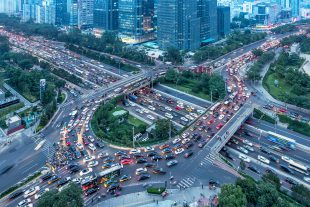
To limit pollution and traffic congestion in Beijing, officials in 2011 imposed a citywide restriction on the number of automobiles residents can purchase annually. That policy has helped limit car sales and emissions. But the system has a loophole: Beijing residents have been going elsewhere in China to purchase cars, then bringing them home. As […]

Evaluating the competition between autonomous vehicles and public transit
The rapid advancement of autonomous vehicles technology in recent years has changed transport systems and consumer habits globally. As countries worldwide see a surge in the use of autonomous vehicles, the rise of shared autonomous mobility on demand (AMoD) service is likely to be next on the cards. Public transit, a critical component of urban […]
Materials breakthrough enables twistronics for bulk systems
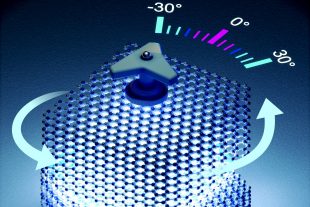
Researchers from the Low Energy Electronic Systems (LEES) interdisciplinary research group at the Singapore-MIT Alliance for Research and Technology (SMART), MIT’s research enterprise in Singapore, together with MIT and National University of Singapore (NUS), have discovered a new way to control light emission from materials. Controlling the properties of materials has been the driving force […]

SMART breakthrough uses artificial neural networks to enhance travel behavior research
Researchers at the Future Urban Mobility (FM) interdisciplinary research group at Singapore-MIT Alliance for Research and Technology (SMART), MIT’s research enterprise in Singapore, have created a synthetic framework known as theory-based residual neural network (TB-ResNet), which combines discrete choice models (DCMs) and deep neural networks (DNNs), also known as deep learning, to improve individual decision-making […]

SMART investigates the science behind varying performance of different colored LEDs
Researchers from the Low Energy Electronic Systems (LEES) interdisciplinary research group at Singapore-MIT Alliance for Research and Technology (SMART), MIT’s research enterprise in Singapore, together with MIT and National University of Singapore (NUS), have found a method to quantify the distribution of compositional fluctuations in the indium gallium nitride (InGaN) quantum wells at different indium […]

Study finds ride-sharing intensifies urban road congestion
Transport network companies (TNCs), or ride-sharing companies, have gained widespread popularity across much of the world, with more and more cities adopting the phenomenon. While ride-sharing has been credited with being more environmentally friendly than taxis and private vehicles, is that really the case today, or do they rather contribute to urban congestion? Researchers at […]
SMART researchers develop 15-minute immune-profiling assay
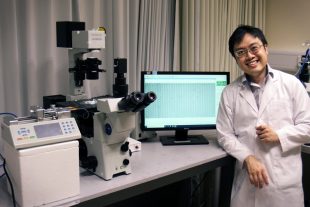
Researchers from Critical Analytics for Manufacturing Personalized-Medicine (CAMP), an interdisciplinary research group at the Singapore-MIT Alliance for Research and Technology (SMART), MIT’s research enterprise in Singapore, have developed a new label-free immune profiling assay that profiles the rapidly changing host immune response in case of infection, in a departure from existing methods that focus on […]
Homing in on longer-lasting perovskite solar cells
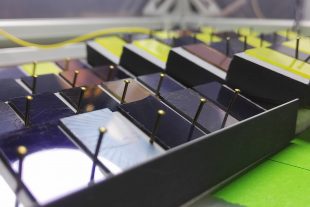
Materials called perovskites are widely heralded as a likely replacement for silicon as the material of choice for solar cells, but their greatest drawback is their tendency to degrade relatively rapidly. Over recent years, the usable lifetime of perovskite-based cells has gradually improved from minutes to months, but it still lags far behind the decades […]
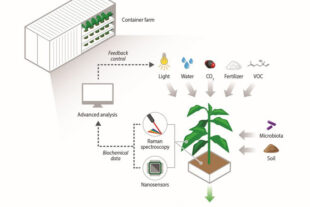
SMART develops analytical tools to enable next-generation agriculture
According to United Nations estimates, the global population is expected to grow by 2 billion within the next 30 years, giving rise to an expected increase in demand for food and agricultural products. Today, biotic and abiotic environmental stresses such as plant pathogens, sudden fluctuations in temperature, drought, soil salinity, and toxic metal pollution — […]