News & Stories
News & Stories Filtered BY
Filtered by
Collaborations
“Mens et manus” in Guatemala
In a new, well-equipped lab at the University del Valle de Guatemala (UVG) in June 2024, members of two Mayan farmers’ cooperatives watched closely as Rodrigo Aragón, professor of mechanical engineering at UVG, demonstrated the operation of an industrial ultrasound machine. Then he invited each of them to test the device.“For us, it is a […]
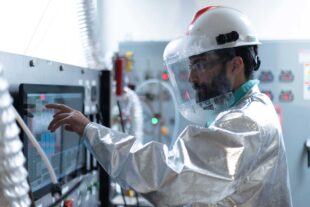
Startup turns mining waste into critical metals for the U.S.
At the heart of the energy transition is a metal transition. Wind farms, solar panels, and electric cars require many times more copper, zinc, and nickel than their gas-powered alternatives. They also require more exotic metals with unique properties, known as rare earth elements, which are essential for the magnets that go into things like […]

SMART researchers develop a method to enhance effectiveness of cartilage repair therapy
Researchers from the Critical Analytics for Manufacturing Personalized-Medicine (CAMP) interdisciplinary research group at the Singapore-MIT Alliance for Research and Technology (SMART), MIT’s research enterprise in Singapore, alongside collaborators from the National University of Singapore Tissue Engineering Programme, have developed a novel method to enhance the ability of mesenchymal stromal cells (MSCs) to generate cartilage tissue by adding […]

Aspiring to sustainable development
In a first for both universities, MIT undergraduates are engaged in research projects at the Universidad del Valle de Guatemala (UVG), while MIT scholars are collaborating with UVG undergraduates on in-depth field studies in Guatemala. These pilot projects are part of a larger enterprise, called ASPIRE (Achieving Sustainable Partnerships for Innovation, Research, and Entrepreneurship). Funded […]
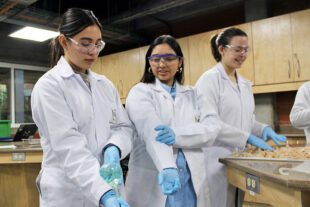
Aspiring to sustainable development
In a first for both universities, MIT undergraduates are engaged in research projects at the Universidad del Valle de Guatemala (UVG), while MIT scholars are collaborating with UVG undergraduates on in-depth field studies in Guatemala. These pilot projects are part of a larger enterprise, called ASPIRE (Achieving Sustainable Partnerships for Innovation, Research, and Entrepreneurship). Funded […]

3 Questions: Bridging anthropology and engineering for clean energy in Mongolia
In 2021, Michael Short, an associate professor of nuclear science and engineering, approached professor of anthropology Manduhai Buyandelger with an unusual pitch: collaborating on a project to prototype a molten salt heat bank in Mongolia, Buyandelger’s country of origin and place of her scholarship. It was also an invitation to forge a novel partnership between two […]
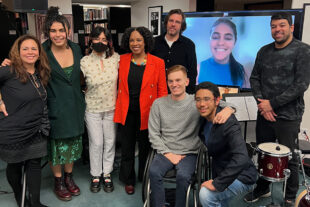
Exploring the rich traditions of Brazilian music
Student presentations tackled themes of identity, nation-building, racism, multiculturalism, and more, as reflected in the rich traditions of Brazilian music at “The Beat of Brazil” last month at the Lewis Music Library. The presentations were by students of Portuguese enrolled in class 21G.821 (The Beat of Brazil: Portuguese Language Through Brazilian Society), taught by Nilma […]

D-Lab off-grid brooder saves chicks and money using locally manufactured thermal batteries
MIT D-Lab students and instructors are improving the efficacy and economics of a brooder technology for newborn chicks that utilizes a practical, local resource: beeswax. Developed through participatory design with agricultural partners in Cameroon, their Off-Grid Brooder is a solution aimed at improving the profitability of the African nation’s small- and medium-scale poultry farms. Since […]
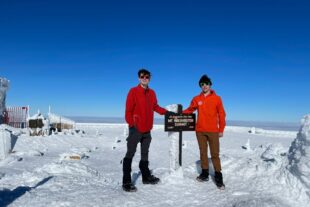
Across the pond to scale new heights
Nathanael Jenkins had always wanted to study aerospace engineering, he just hadn’t quite found the right place for it. He had explored options close to his home in Hampshire, U.K., but had never considered studying in the United States. That changed when a family vacation brought him to the MIT campus in 2018. “MIT felt […]
