News & Stories
News & Stories Filtered BY
Filtered by
Research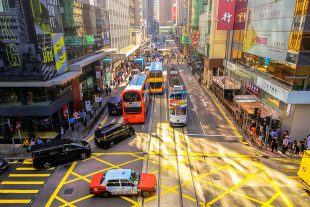
SMART breakthrough uses artificial neural networks to enhance travel behavior research
Researchers at the Future Urban Mobility (FM) interdisciplinary research group at Singapore-MIT Alliance for Research and Technology (SMART), MIT’s research enterprise in Singapore, have created a synthetic framework known as theory-based residual neural network (TB-ResNet), which combines discrete choice models (DCMs) and deep neural networks (DNNs), also known as deep learning, to improve individual decision-making […]
China’s transition to electric vehicles
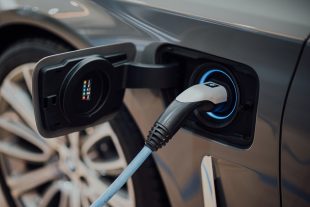
In recent decades, China’s rapid economic growth has enabled more and more consumers to buy their own cars. The result has been improved mobility and the largest automotive market in the world — but also serious urban air pollution, high greenhouse gas emissions, and growing dependence on oil imports. To counteract those troubling trends, the […]

SMART investigates the science behind varying performance of different colored LEDs
Researchers from the Low Energy Electronic Systems (LEES) interdisciplinary research group at Singapore-MIT Alliance for Research and Technology (SMART), MIT’s research enterprise in Singapore, together with MIT and National University of Singapore (NUS), have found a method to quantify the distribution of compositional fluctuations in the indium gallium nitride (InGaN) quantum wells at different indium […]

Study finds ride-sharing intensifies urban road congestion
Transport network companies (TNCs), or ride-sharing companies, have gained widespread popularity across much of the world, with more and more cities adopting the phenomenon. While ride-sharing has been credited with being more environmentally friendly than taxis and private vehicles, is that really the case today, or do they rather contribute to urban congestion? Researchers at […]
SMART researchers develop 15-minute immune-profiling assay
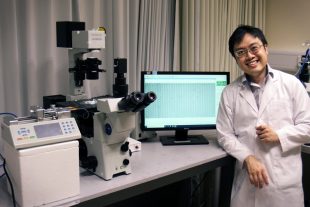
Researchers from Critical Analytics for Manufacturing Personalized-Medicine (CAMP), an interdisciplinary research group at the Singapore-MIT Alliance for Research and Technology (SMART), MIT’s research enterprise in Singapore, have developed a new label-free immune profiling assay that profiles the rapidly changing host immune response in case of infection, in a departure from existing methods that focus on […]
Encouraging solar energy adoption in rural India
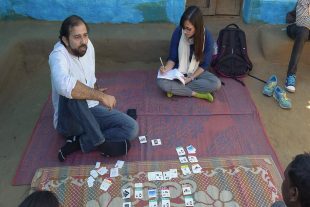
More than 73 million households in remote areas of the world get electricity not from a conventional power grid but rather from sources such as solar lanterns, solar home systems (SHSs) that can power several devices, and local solar-based microgrids. Such off-grid devices and systems provide life-changing services to people who are off centralized electricity […]
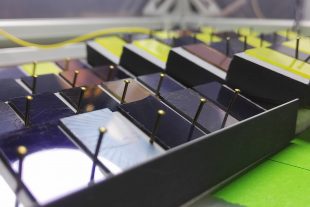
Homing in on longer-lasting perovskite solar cells
Materials called perovskites are widely heralded as a likely replacement for silicon as the material of choice for solar cells, but their greatest drawback is their tendency to degrade relatively rapidly. Over recent years, the usable lifetime of perovskite-based cells has gradually improved from minutes to months, but it still lags far behind the decades […]

Sustainable solutions at home and abroad
Arnav Patel is a self-described sustainability enthusiast. Working on solutions related to climate change has been a central thread woven throughout his time at MIT. As a first-year student, he was initially drawn to mechanical engineering because he wanted to keep his options open. “I felt like mechanical engineering is that perfect niche where there’s […]
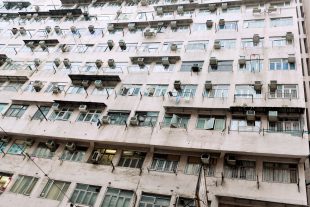
Cooling homes without warming the planet
As incomes in developing countries continue to rise, demand for air conditioners is expected to triple by 2050. The surge will multiply what is already a major source of greenhouse gas emissions: Air conditioning is currently responsible for almost 20 percent of electricity use in buildings around the world. Now the startup Transaera is working […]
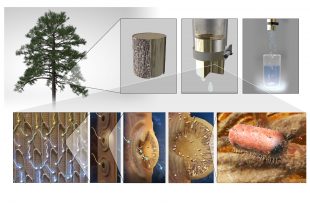
MIT engineers make filters from tree branches to purify drinking water
The interiors of nonflowering trees such as pine and ginkgo contain sapwood lined with straw-like conduits known as xylem, which draw water up through a tree’s trunk and branches. Xylem conduits are interconnected via thin membranes that act as natural sieves, filtering out bubbles from water and sap. MIT engineers have been investigating sapwood’s natural […]